
A Glimpse of Philippine Materials for Teaching: From Fieldwork to Publication
Technology has opened remarkable opportunities for educators to connect regardless of location, making it possible to share ideas and learn from one another in ways that were once unimaginable. While nothing can truly replace the richness and joy of making music together in person, I am sincerely grateful for the opportunity to meet this year’s CSUB Kodály Institute Certification Course participants online and to share a glimpse of my life’s work with them.
On June 25, 2026, I had the privilege of presenting “A Glimpse of Philippine Materials for Teaching: From Fieldwork to Publication” as part of the CSUB Kodály Institute’s Special Topics Session. During our hour together, I shared the journey that has shaped my life’s work—listening to the songs of Filipino children, farmers, and communities, documenting these precious musical traditions through fieldwork, and transforming them into educational resources that preserve cultural heritage while serving the needs of music teachers and their students.
One of the highlights of the session was sharing a video presentation of my fieldwork experiences in the Philippines. I wanted the participants not only to see where these songs came from but also to gain an appreciation of the process of documenting living musical traditions. My hope was that the video inspired fellow educators to value the musical heritage within their own communities and perhaps even embark on their own fieldwork journeys to preserve and celebrate the songs and traditions that surround them.
I would like to express my heartfelt gratitude to Dr. Rene Ferrell and Mr. Matthew Hanne for their gracious invitation to be part of this year’s summer program. Their unwavering dedication to teacher education and steadfast commitment to providing meaningful professional learning opportunities continue to make a lasting impact on music educators. It is because of visionary leaders like them that teachers are encouraged to broaden their perspectives and explore the musical traditions of cultures beyond their own.
Bakersfield and the surrounding communities are home to a vibrant and growing Filipino population whose cultural heritage has enriched the region for generations. It is my hope that this session, though brief, gave participants a glimpse of the rich musical traditions that many of these Filipino families have carried with them. More importantly, I hope it ignited an initial spark of curiosity to learn more about these traditions and to discover how they can become meaningful resources for culturally responsive music education.
My sincere thanks go to all the participants for their enthusiasm and warm engagement throughout the session. Even through a computer screen, I felt a genuine sense of connection. I look forward to the day when I can visit California State University, Bakersfield, in person so that we can experience together what no online platform can fully replicate—the shared joy of singing, moving, and making music.
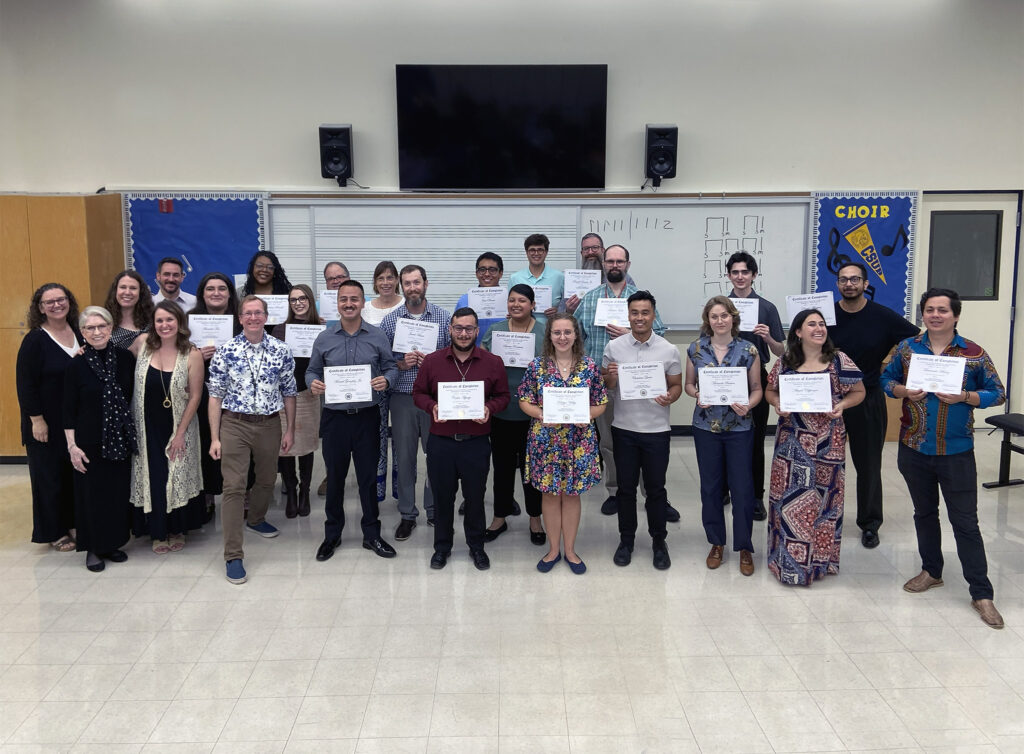
Finally, my heartfelt congratulations to all the participants, faculty, and staff on the successful completion of this summer’s program. I am confident that you will return to your schools this fall with renewed inspiration, fresh ideas, and an even deeper commitment to your students. May the seeds of learning that were planted during the past weeks continue to grow and blossom, enriching countless young lives through the gift of music for many years to come.